An eight-seat poker table with a server in its pedestal, a camera in the ceiling, a tablet at every seat and a heart monitor for a clock. Over-engineered on purpose.
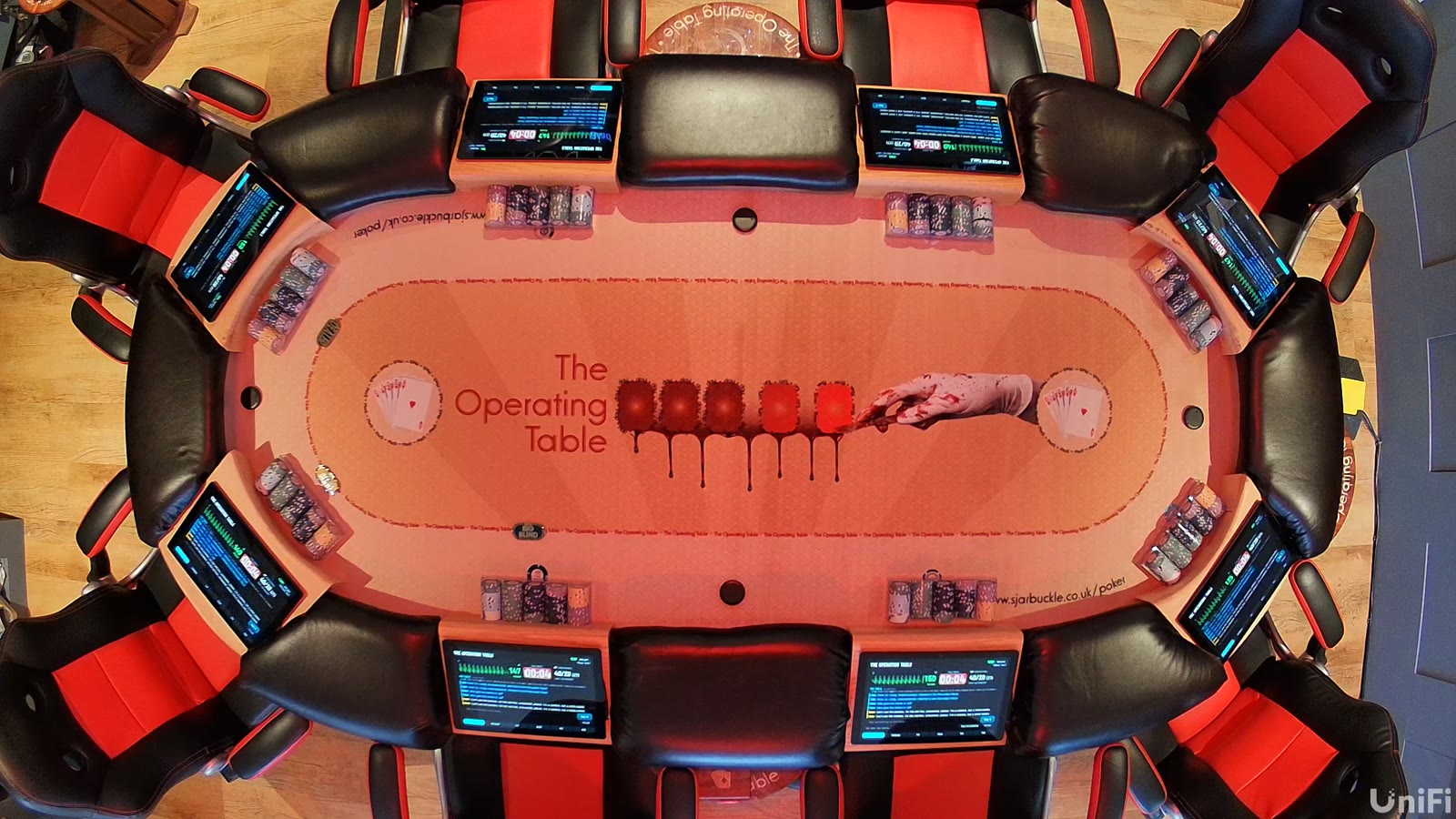
Everything in this film is real: the table's own TVs and tablets, captured straight off their screens, and its ceiling camera finding the dealer button while a real pair of hands moves it.
Sound on. The voice is the table's own.
Nobody needed any of this. That was never the point.


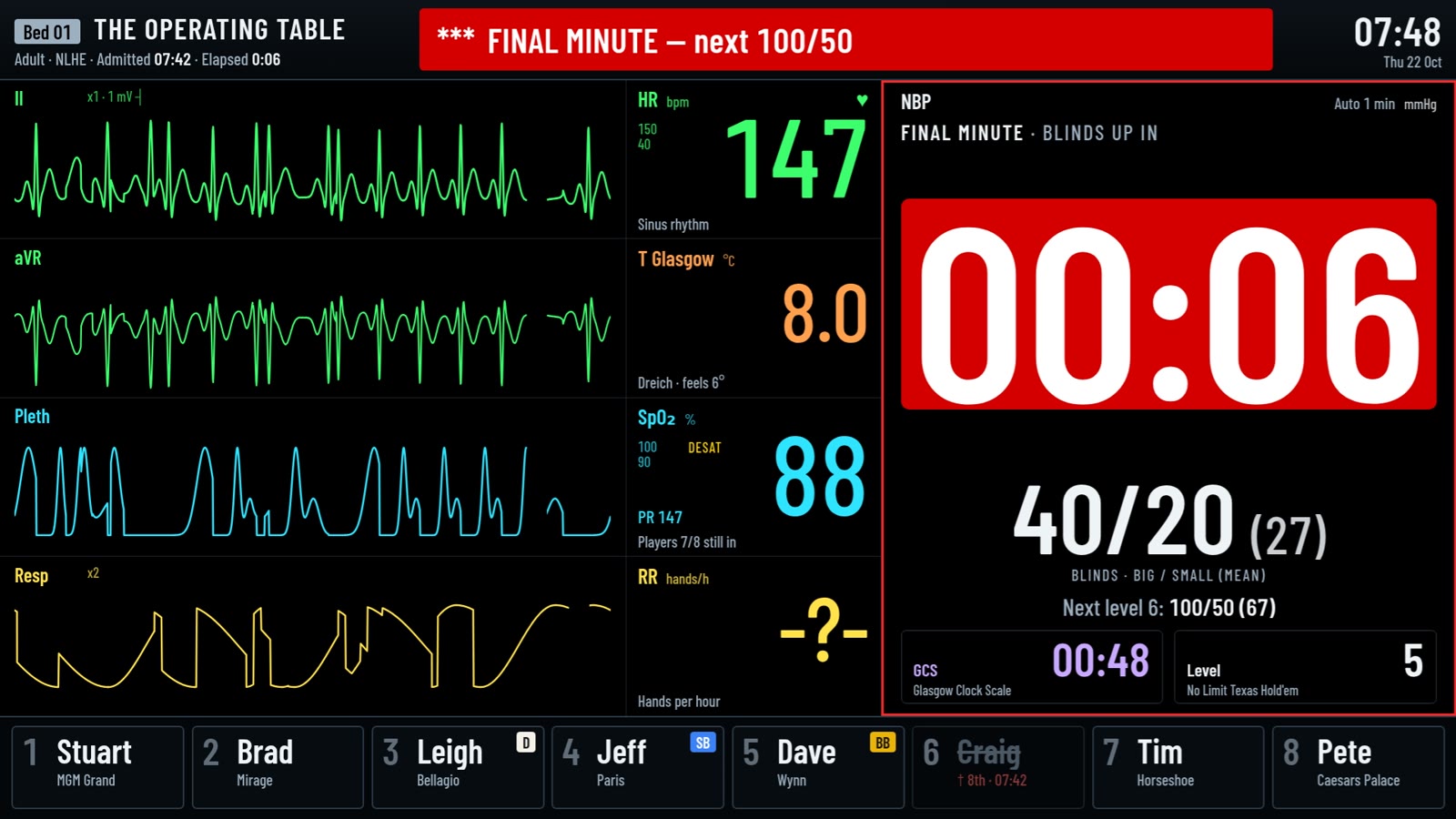
The clock is a patient. In the last minute of every blind level it starts to crash.
Every seat has its own tablet with the clock on it and a great deal more besides. Tap anything to make it bigger.

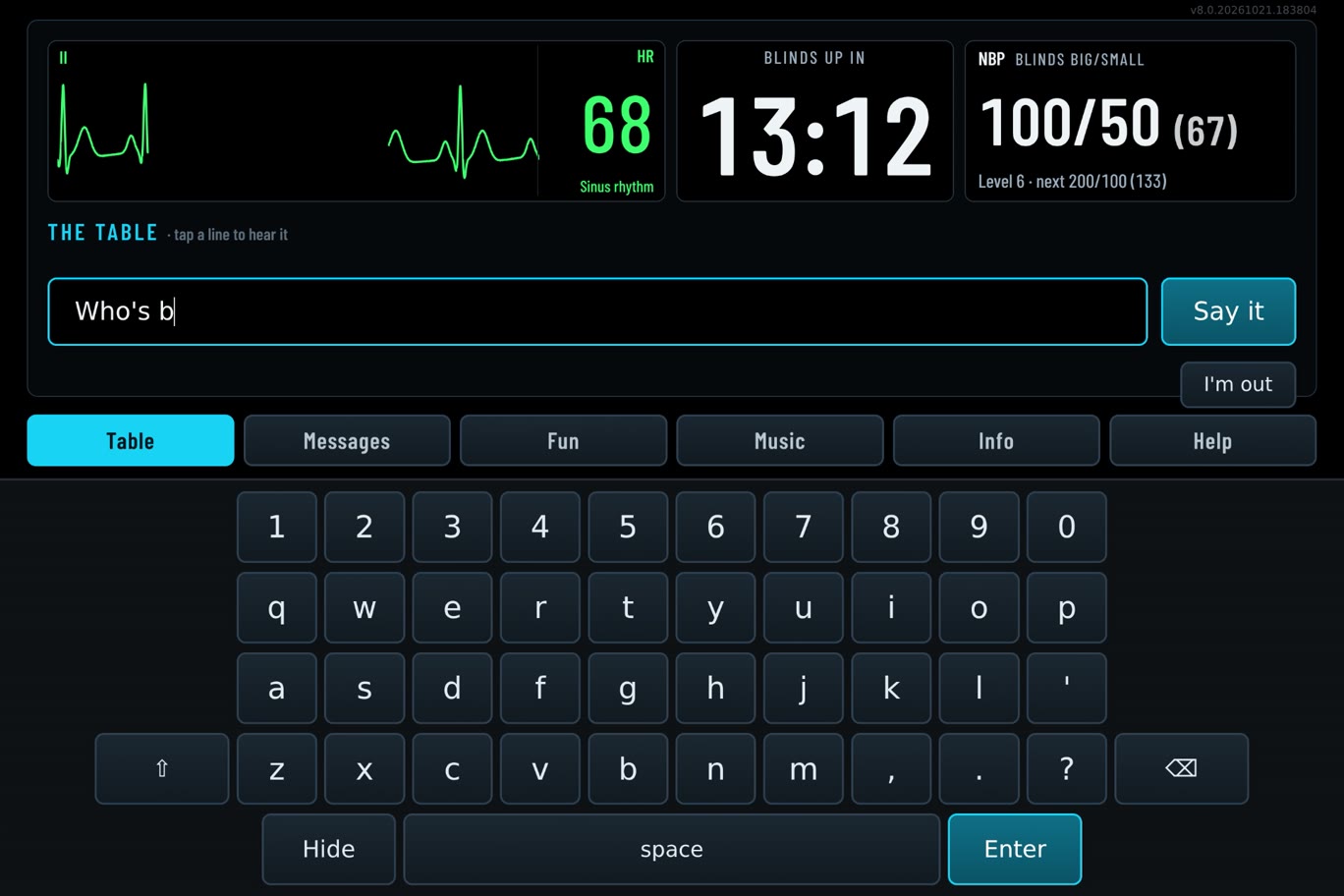
Type anything and the table reads it out to the room in a Scottish accent. Tap any line on the ticker to hear it again.

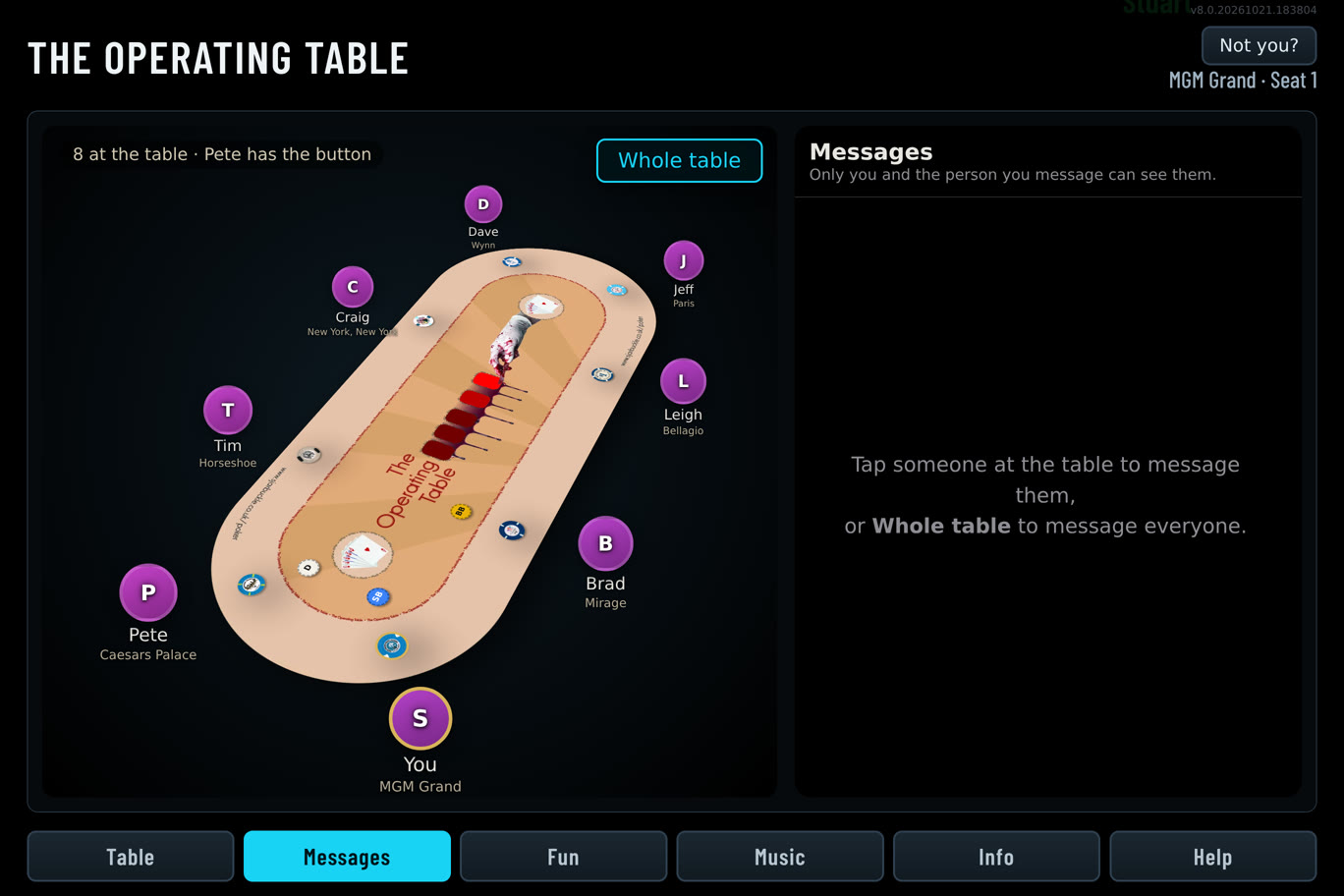
A 3D map of the table. Tap a player to message them privately, nudge them, or tell them they're bluffing.

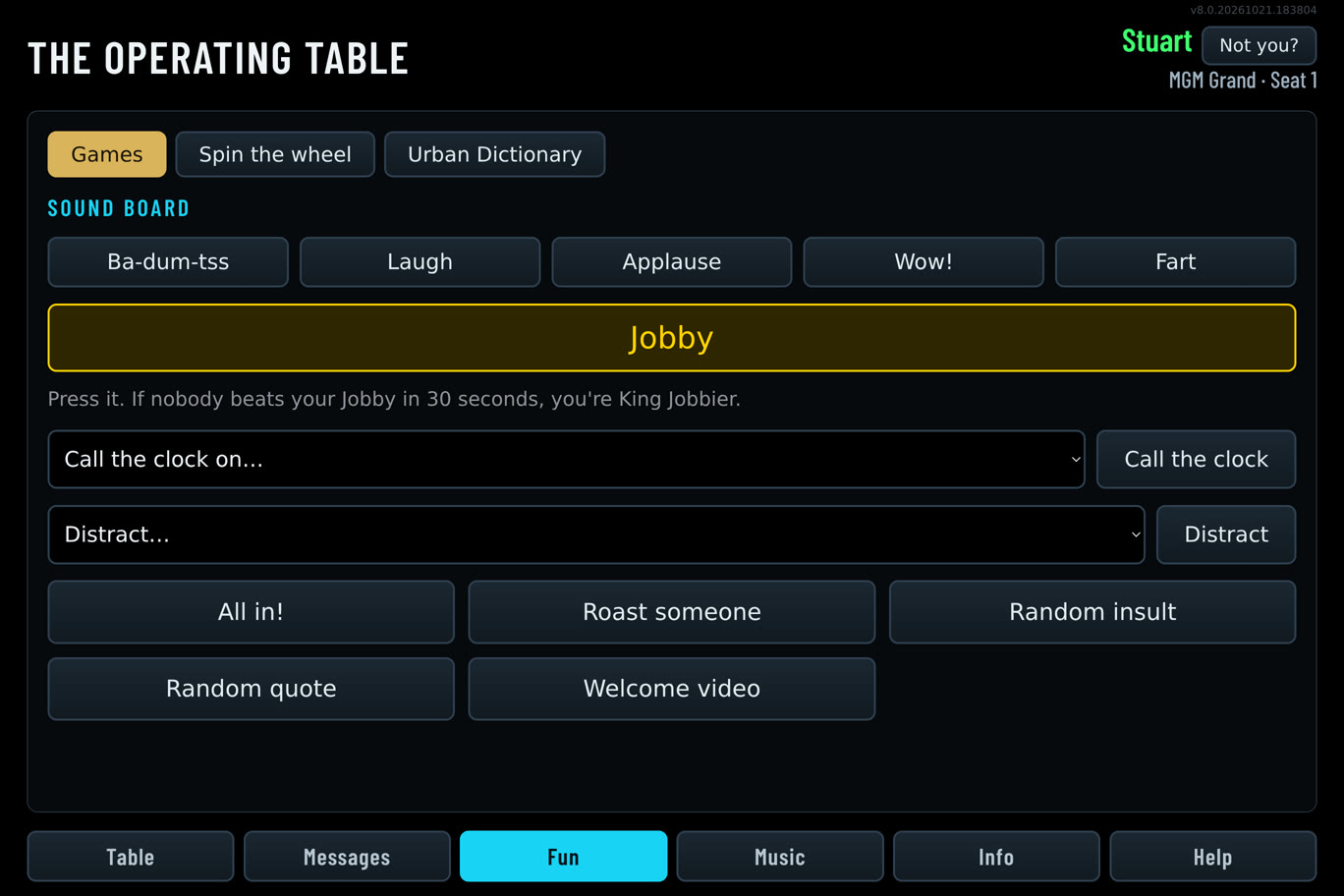
Call the clock on a slow player, spin the wheel for who buys the drinks, the sound board, and the ancient and noble game of Jobby.

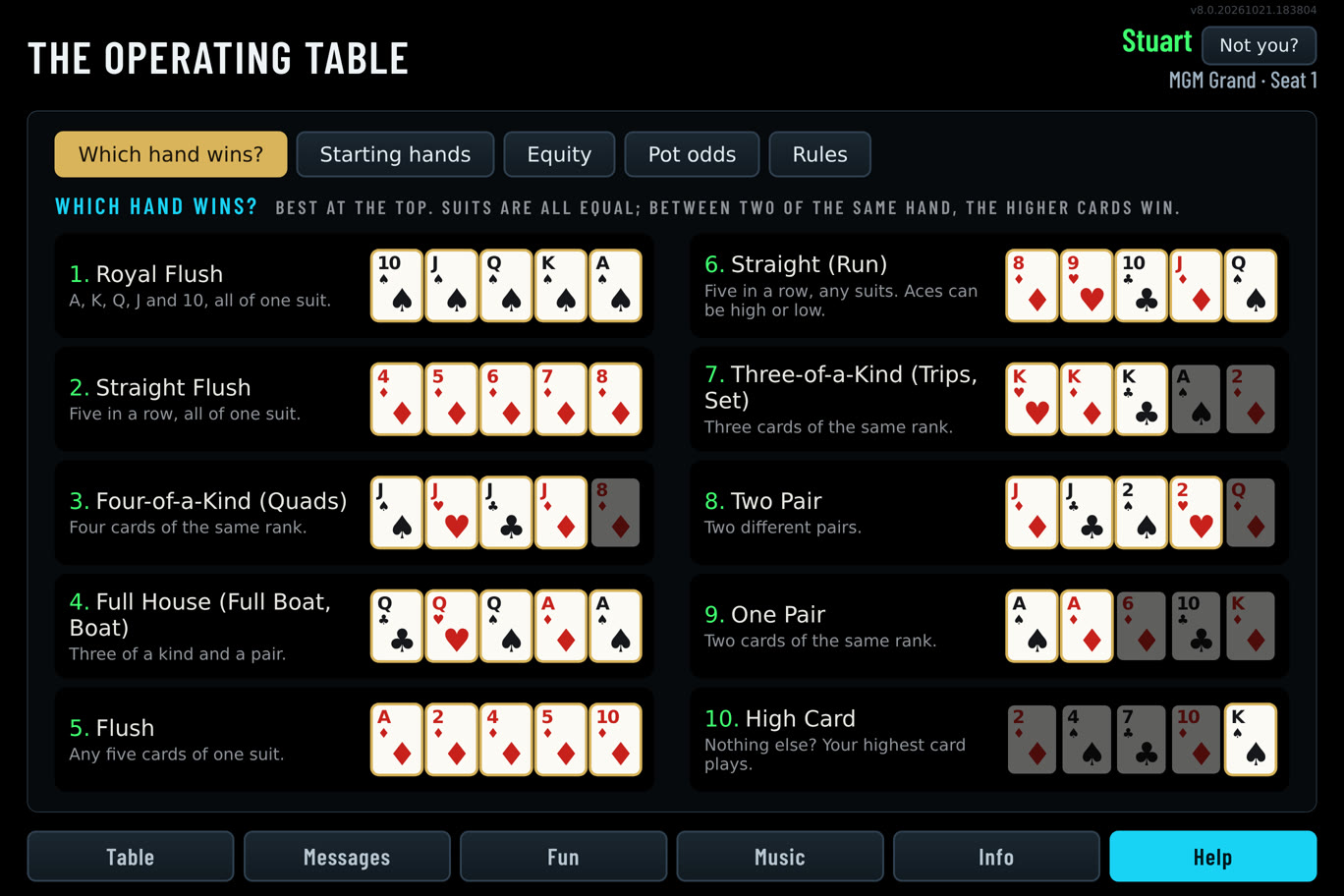
Which hand wins, a starting-hands heat map, an equity calculator and pot odds. For the regulars who still ask what beats what.
The TVs change outfit on demand. Every style is hand-built around the same three obsessions: poker, medicine and Scotland. Each one dresses both screens; these are the left TV.
Filed in the patient's notes, as is proper.
| Table | Eight seats, each named after a Las Vegas casino: MGM Grand, Mirage, Bellagio, Paris, Wynn, New York New York, Horseshoe and Caesars Palace. Custom printed felt, LED rail lighting, chip racks at every seat and an automatic shuffler. |
|---|---|
| Server | A PC called VEGAS lives in one of the table's pedestals and drives both TVs directly.Intel Core i5 · 6 cores · 16 GB · Debian Linux · C# on .NET 10 with SignalR · wakes itself over the network |
| Screens | Two LG 4K televisions, a 55" and a 65": one for the clock, one for the ticker and whatever else the current style puts there. The server switches them on and off. |
| Tablets | Eight Microsoft Surface Pro 6 tablets, one per seat, running Debian Linux as kiosks. No logins. No surprise updates. |
| Ceiling camera | A UniFi G5 Bullet pointing straight down, tracking the dealer and blind buttons with OpenCV. It also records the games for posterity.2688 × 1512 · 30 fps |
| Voice | Neural text-to-speech with a Scottish accent. It announces the blinds, welcomes players, reads out texts and emails, and roasts people on request. |
| Lights | Home Assistant runs the room's colour lights: white flashes when the blinds go up, red for a bust-out, everything off but the red for the final minute.Coming soon: an addressable RGBW rail, one colour zone per seat |
| Music | Spotify, queued from any seat's tablet, played through the room's speakers. A shared playlist remembers what the table likes. |
| Messaging | The table has its own mobile number and its own email address, and it sends its own invitations. |
| Archive | 106 clips of vintage medical training films, 1930s to 1950s, which play on the TVs at random to keep everyone's mind off their cards. |
| Content | Over five thousand insults, clean and otherwise; nearly eight hundred quotes; Urban Dictionary on tap; a Scots word of the night; local weather, rated for dreichness. |
There's no booking form. Naturally, you talk to the table.
Say who you are and that you'd like a seat. Your text is read out loud to whoever is at the table. All of it. Choose your words.
For players already on the list: emails from them are read out too, and invitations can be answered by email. New here? Text first; the table only reads out email from people it knows.
Invitations go out by text or email from the table itself, with the date, the game and how many seats there are. A calendar entry comes with the email.
Just reply to the invitation. Seats go in the order people say yes. After that there's a waiting list, and you'll hear if a seat comes free.
Pick a casino, tap your name on the tablet, and the table announces you. There's a reminder the evening before, in case you were thinking of bottling it.
The table has been rewritten more times than it has been sensibly explained.